
Okay so UX design for conversion rate optimization is honestly the thing that finally stopped me from hemorrhaging money on my dumb little e-commerce side project last summer. I’m sitting here in my messy home office in Austin, Texas right now—fans blasting because it’s already stupid hot even though it’s barely March, empty Whataburger bag on the desk, coffee cold for the third time—and I’m still kinda mad at past-me for ignoring it so long.
Like seriously. I launched this Shopify store selling these custom enamel pins (dumb niche I know, but people buy weird stuff) and the first three months? Conversion rate hovering around 0.7%. That’s trash. I was getting traffic—decent traffic from some random Reddit posts and $0.80 Facebook ads—but nobody was buying. Cart abandonment was brutal. I’d refresh the analytics at 2 a.m. feeling like a loser.
Why I Used to Think UX Design Was Just “Making Things Pretty”
I used to roll my eyes at UX people. Thought it was all fancy wireframes and user personas and bullshit corporate jargon. My site looked “fine” to me. Big hero image, product photos I took with my iPhone in bad lighting, bright green “Add to Cart” buttons that screamed 2012. Fonts mismatched. Mobile version? Looked like someone kicked it down the stairs.
But then one night my buddy Jake—who actually knows what he’s doing—sat on my couch (the one with the mystery stain from last year’s BBQ) and scrolled through my site on his phone. He didn’t even say anything mean at first. Just sighed real loud and went “…dude.” That one sigh cost me probably $4k in lost sales before I fixed it.
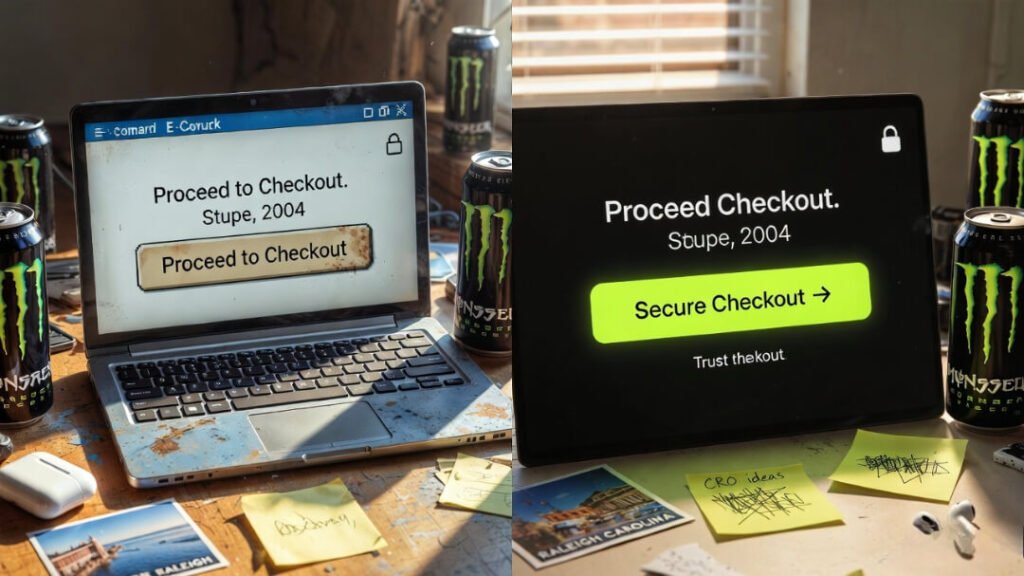
The Moment UX Design Clicked as Conversion Rocket Fuel
Turns out good UX design for conversion rate optimization isn’t optional fluff—it’s literally the difference between someone impulse-buying your $18 enamel pin or bouncing forever. When people hit friction—slow load, confusing navigation, form fields that make no sense, buttons too small on mobile—they just leave. And they take their wallet with them.
Here’s what actually moved the needle for me (and yeah I’m embarrassed how basic some of this was):
- Fixed the mobile layout so the “Buy Now” button wasn’t hiding behind my fat thumb
- Made checkout one page instead of that stupid multi-step nonsense that felt like filling out taxes
- Added trust signals—real customer photos instead of stock, “secure checkout” badge that wasn’t fake
- Cut form fields from 8 to 4 (guess what? People hate typing their life story to buy a pin)
- Switched button color from lime green to a calmer but still punchy coral after A/B testing showed +22% clicks
Conversion rate jumped to 2.4% in like six weeks. Not viral rich territory, but I actually started making beer money instead of just burning ad spend.
My Biggest UX Screw-Ups That Tanked Conversions
Look I’m not gonna pretend I’m some CRO guru now. I still make dumb mistakes.
- Once I hid the price until hover because I thought it was “mysterious and cool.” Turns out people hate mystery when they’re about to spend money. Conversion dropped 40% in 48 hours.
- Put a giant pop-up newsletter signup that covered half the screen on load. Felt clever for “capturing emails.” Nope. Just pissed everyone off. Bounce rate shot to 85%.
- Used a font that looked cute on desktop but on mobile it rendered like hieroglyphics. Had to refund three people who said they couldn’t read the product description.
Every single time it came back to UX design for conversion rate optimization. If the experience feels sketchy, slow, or disrespectful of someone’s time… they’re gone.
Quick Reality Check List I Wish I Had Earlier
If your conversion rate sucks, run through this before blaming the ads or the product:
- Load time under 3 seconds on mobile? (use PageSpeed Insights, it’ll hurt your feelings)
- Can someone checkout in under 60 seconds without rage-quitting?
- Are buttons and CTAs stupidly obvious even to your drunk uncle?
- Does the site feel trustworthy or like it was made in 2009?
- Mobile-first or desktop-first? (if you guessed wrong, fix it yesterday)
Wrapping This Ramble Up
Anyway, point is—UX design for conversion rate optimization isn’t some fancy extra you add when you “get big.” It’s table stakes. If you’re bleeding sales despite decent traffic, nine times out of ten it’s because the experience feels janky. Fix the jank, watch the numbers climb.
If you’re sitting there nodding like “yeah that’s me,” just start small. Pick one page—probably checkout—and make it suck less. Test it. You’ll be shocked how fast it pays for itself.
What’s the dumbest UX thing you’ve ever done that killed your conversions? Drop it in the comments, I need to feel less alone.