
Okay, here we go.
Growth lab vs traditional marketing is honestly the thing that still keeps me up at night sometimes, staring at my ceiling fan in this little duplex in Denver while the streetlights flicker through the blinds.
I used to think marketing was simple: throw money at Facebook ads, maybe some billboards if the client had deep pockets, run some TV spots if we were feeling fancy, and call it a day. That was classic traditional marketing and it felt safe. Predictable. You paid for impressions, you got impressions, maybe some sales if the creative didn’t completely suck.
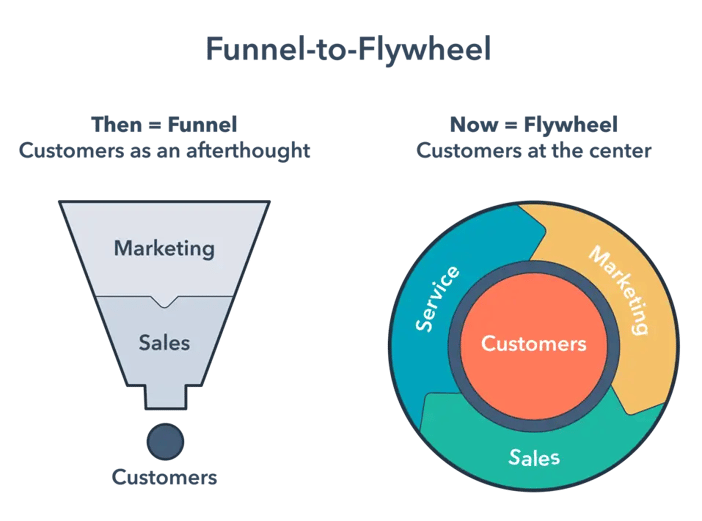
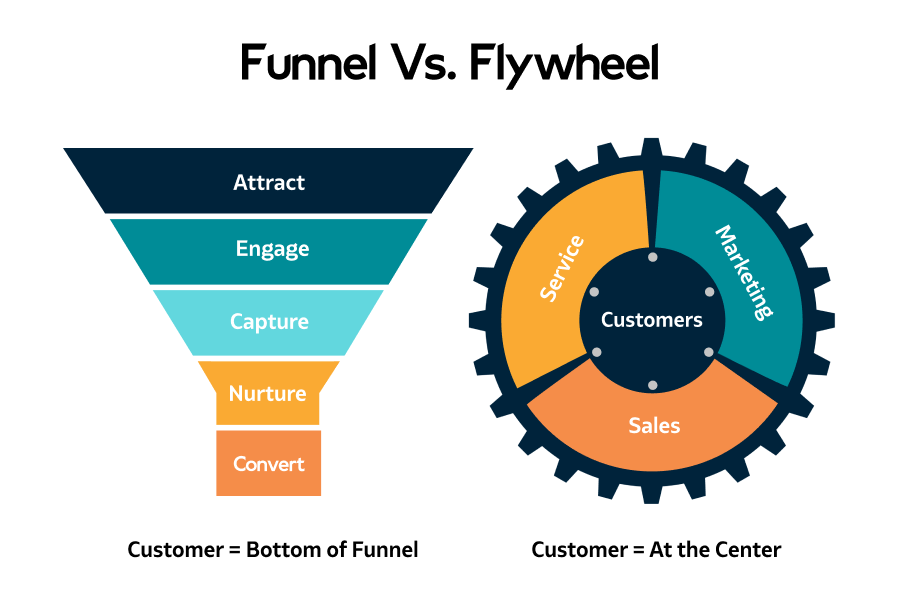
The shift from the classic funnel (linear: awareness → acquisition → done) to the flywheel (circular:
Then around 2019 I got obsessed with this whole growth lab thing—running tiny experiments super fast, obsessing over one single metric, breaking everything into hypotheses like a mad scientist who’s had too much cold brew.
And let me tell you, the differences are brutal and kind of hilarious when you step back.
Why Growth Lab Marketing Feels Like Gambling (But the Good Kind) Growth Lab vs Traditional Marketing
Traditional marketing is basically placing a big bet once or twice a year. You spend $40k on a Super Bowl-style local campaign or a glossy magazine spread, cross your fingers, and pray the phone rings.
Growth lab? It’s like playing blackjack but you get to see two cards every hand and adjust your bet 47 times a day.
I remember one winter—I think it was 2022, snowing sideways outside my window, I was wrapped in this ratty Patagonia fleece—when I blew through $8,000 in Facebook ads for a SaaS client in literally 9 days. Zero movement on signups. Traditional me would’ve just shrugged, blamed the creative team, and moved on.
Instead I pivoted to a growth lab mindset: killed the campaign, spun up six micro-tests (different landing page headlines, one weird TikTok organic angle, email sequence tweaks), tracked everything in a Google Sheet that looked like it had been through a war. One tiny change—adding “free for 30 days no card” to the CTA—2.8x’d the conversion rate in 72 hours.
That’s the dopamine hit traditional marketing never gave me.
Speed & Iteration: Growth Lab Wins, Hands Down
Traditional marketing moves at the speed of committee approvals and printing deadlines.
Growth lab marketing moves at the speed of “let’s just ship it and see what explodes.”
- Traditional: 3-month campaign planning cycles, big creative shoots, legal reviews that take longer than the actual execution
- Growth lab: Tuesday at 2 p.m. I have an idea in the shower, by 4 p.m. it’s live on a $200 budget, by 9 p.m. I know if it’s trash
I’ve legit had campaigns live for 45 minutes before I killed them because the open rate looked like a typo.
Budget Reality Check (This One Hurts) Growth Lab vs Traditional Marketing
Traditional marketing loves big budgets. You need scale to make TV, radio, or even decent programmatic display work.
Growth lab thrives on small bets. I’ve grown side projects from $0 to $12k MRR using mostly free tools, Reddit threads, and $50/day ad tests.
But here’s the embarrassing part: I still catch myself falling back into old habits. Last summer I recommended a client do a big trade show booth—$18k for banners, swag, booth babes (okay we didn’t call them that), the works. We got like 47 leads and 3 were real. Meanwhile my scrappy little LinkedIn comment bot experiment (don’t judge) pulled in 211 warm leads for $0 spend.
I felt so dumb.
For more on lean experimentation check this classic GrowthHackers article on running effective experiments or Brian Balfour’s old but gold framework here.
Data & Measurement: Where Traditional Marketing Still Kinda Sucks
Traditional folks love vanity metrics. Impressions, reach, “share of voice.” Cool story.
Growth lab people are psychopaths about activation Growth Lab vs Traditional Marketing, retention, revenue per user, cohort curves. If it doesn’t tie back to money in the bank eventually, we don’t care.
I still have nightmares about the time I presented “2.4 million impressions!” to a boardroom and the CFO just stared at me like I’d confessed to tax fraud.
Creative Control & Risk Tolerance
Traditional marketing usually means big agencies, big egos, “trust the process.”
Growth lab is me in sweatpants at 11 p.m. rewriting copy because the data said “this headline is trash.”
The creative freedom is addicting but also terrifying. No safety net. No one to blame but yourself when it flops.
So… Which One Should You Actually Do?
Look, if you have millions and a brand that needs mass awareness (think Coca-Cola, Ford, basically anything people buy with emotion more than logic), traditional marketing still has its place.
But if you’re a startup, small business, SaaS, e-comm, creator, literally anyone who needs to prove product-market fit fast and grow without burning a hole in their bank account… growth lab marketing is the only sane path right now.
I’m not saying traditional is dead. I’m saying it’s expensive nostalgia for most of us.

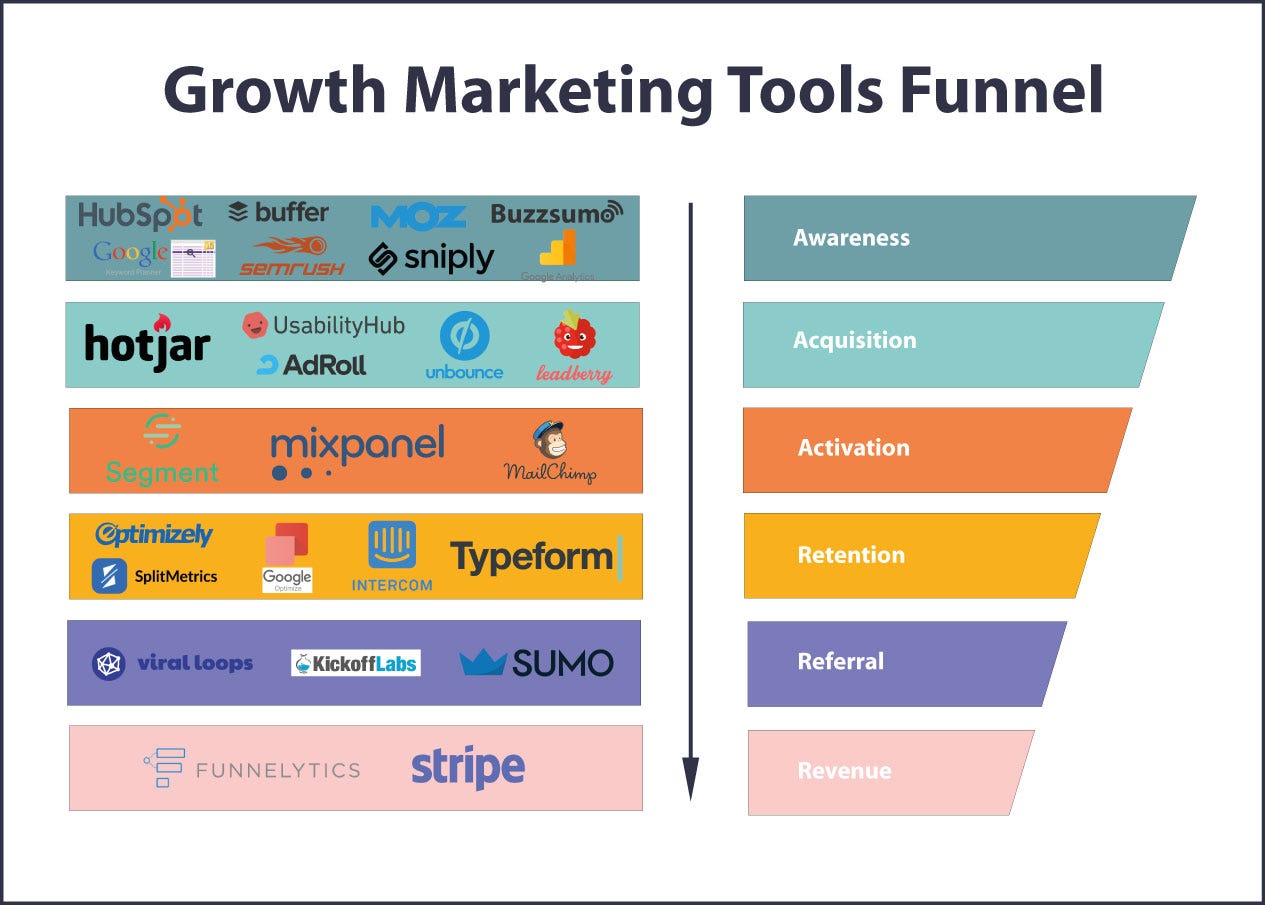
These capture the core contrast: big-brand emotional billboards (traditional) vs. efficient, experiment-
These days I run almost everything through a growth lab lens first. Test small, learn fast, scale what works, kill what doesn’t. Rinse. Repeat until something sticks or I cry in my kitchen at 3 a.m. Growth Lab vs Traditional Marketing (has happened twice, no big deal).
What about you? Still running big campaigns the old way or have you gone full mad scientist too? Drop a comment—I’m genuinely curious and also kinda lonely in my home office sometimes.
If this resonated even a little, try running one stupid-small experiment this week. Worst case you lose $20 and some pride. Best case you accidentally 10x something.

