
Alright, let’s just dive in because I’m sitting here in my home office in Austin, Texas, AC blasting because it’s already stupid hot even though it’s only March, and I’m staring at yet Run Growth Lab Tests Like a Pro another flat conversion graph from last week’s growth lab test that bombed. If you want to run growth lab tests like a pro—or at least stop running them like an amateur who keeps hurting his own feelings—I’m gonna tell you exactly how I clawed my way to semi-competent after years of mostly failing.
Seriously, I used to treat growth lab experiments like throwing spaghetti at the wall. I’d read some fancy article about “high-velocity testing” and then spend three days building a completely unvalidated landing page variant nobody asked for. Spoiler: open rates stayed at 18%, click-throughs laughed at me, and I ate way too many Whataburger taquitos out of sadness.
Why Most People Suck at Running Growth Lab Tests (Including Me, Until Recently)
Look, running growth lab tests like a pro isn’t about having the shiniest tool stack or the biggest budget. It’s about not lying to yourself for weeks.
Here’s the brutal truth I learned the hard way:
- I used to jump straight to building before even writing a one-sentence hypothesis. Classic me move.
- I’d run tests for 28 days because “stat sig takes time” even when the graph looked like a dead EKG by day 5.
- I ignored qualitative feedback because numbers felt “more objective.” Yeah, that cost me four months once.
Step 1: Actually Write a Hypothesis That Isn’t Trash
If you can’t explain your growth lab test in Run Growth Lab Tests Like a Pro one snappy sentence that even your non-technical roommate could repeat back to you, abort immediately.
Bad hypothesis I once ran: “Adding emojis to the CTA will increase clicks because people like colorful things.”
Actual good one I run now: “First-time visitors bounce because our hero headline doesn’t address their biggest fear (losing money on bad investments), so changing it to ‘Stop Guessing—See What Actually Works Before You Spend a Dime’ will lift time-on-page by ≥15%.”
Write it. Say it out loud. If it sounds dumb, it probably is.
Step 2: Ruthless Prioritization (ICE Is Still King, Fight Me)
I still use simple ICE scoring even though everyone’s dunking on it in 2026. Impact × Confidence × Ease. Score 1-10.
Last quarter I killed three “cool” growth experiments because their ICE was under 40. Saved probably 200 hours of dev time. Felt like a grown-up for once.
Step 3: Set Up the Damn Test Without Over-Engineering
Use whatever tool you already pay for. I bounce between:
- Vercel + PostHog for quick frontend experiments
- Optimizely when the client insists on enterprise vibes
- Sometimes just Google Optimize legacy Frankenstein hacks (don’t judge)
Pro tip from someone who once broke production twice: always run a smoke test on 5% traffic for 48 hours before going all-in.
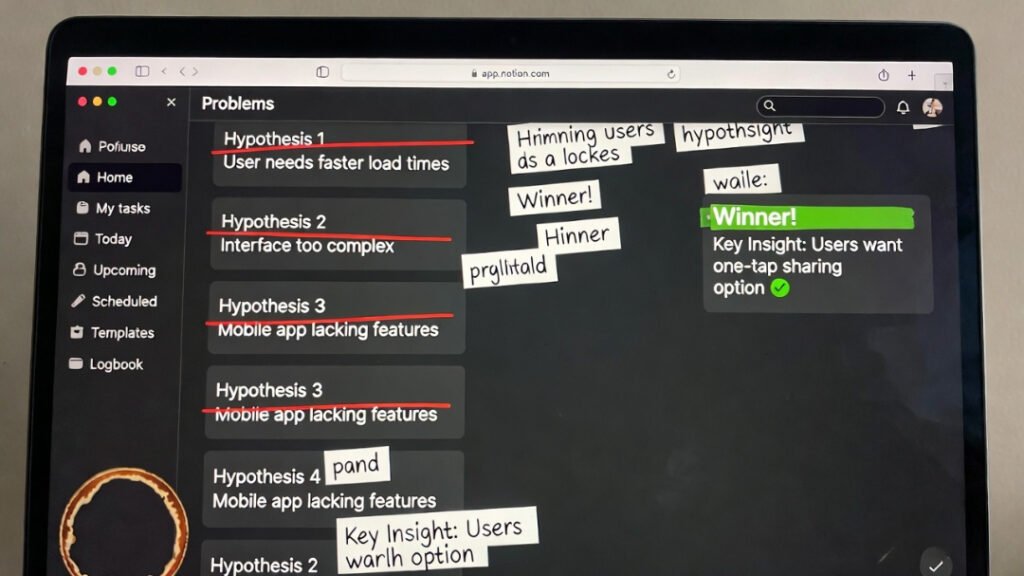
Step 4: When to Kill It Early (and Not Feel Guilty)
This is where I used to fail hardest. I’d see -12% after day 3 and think “small sample, it’ll turn around.” Nope. It never did.
Now my rule is stupid simple:
- If p-value < 0.05 and effect is negative → kill it
- If flat after 50% of planned sample → kill it
- If directionally good but not hitting minimum lift → keep it but don’t celebrate yet
Saved my sanity and a lot of server costs.
Step 5: The Post-Mortem That Actually Matters
After every growth lab test—win or lose—I force myself to write three things in a Notion page nobody else reads:
- What actually happened (numbers + weird qualitative snippets)
- Why I think it happened (my best guess, no sugarcoating)
- One thing I’ll do differently next time
Last month a pricing page test tanked so hard I almost cried. Post-mortem revealed I changed too many variables at once (price + layout + trust badges). Rookie mistake. Next test? One variable. Felt boring. Worked way better.
Anyway.
If you’re reading this and thinking “this dude still sounds kinda chaotic,” yeah, I am. I still run growth lab tests that flop spectacularly. I still second-guess myself at 11 p.m. when the data looks cursed. But I’m getting better at failing faster and learning more.
So go run your next growth lab test. Write the hypothesis first. Kill the losers early. And maybe don’t eat Whataburger at 2 a.m. when it bombs (unless you genuinely like the taquitos, then by all means).
Hit me in the comments—what’s the dumbest growth experiment you’ve ever run? I need solidarity.
For more on this stuff I keep coming back to these:
- Brian Balfour’s Growth Experiment Framework – still gold
- PostHog’s experimentation docs – because free is nice

