
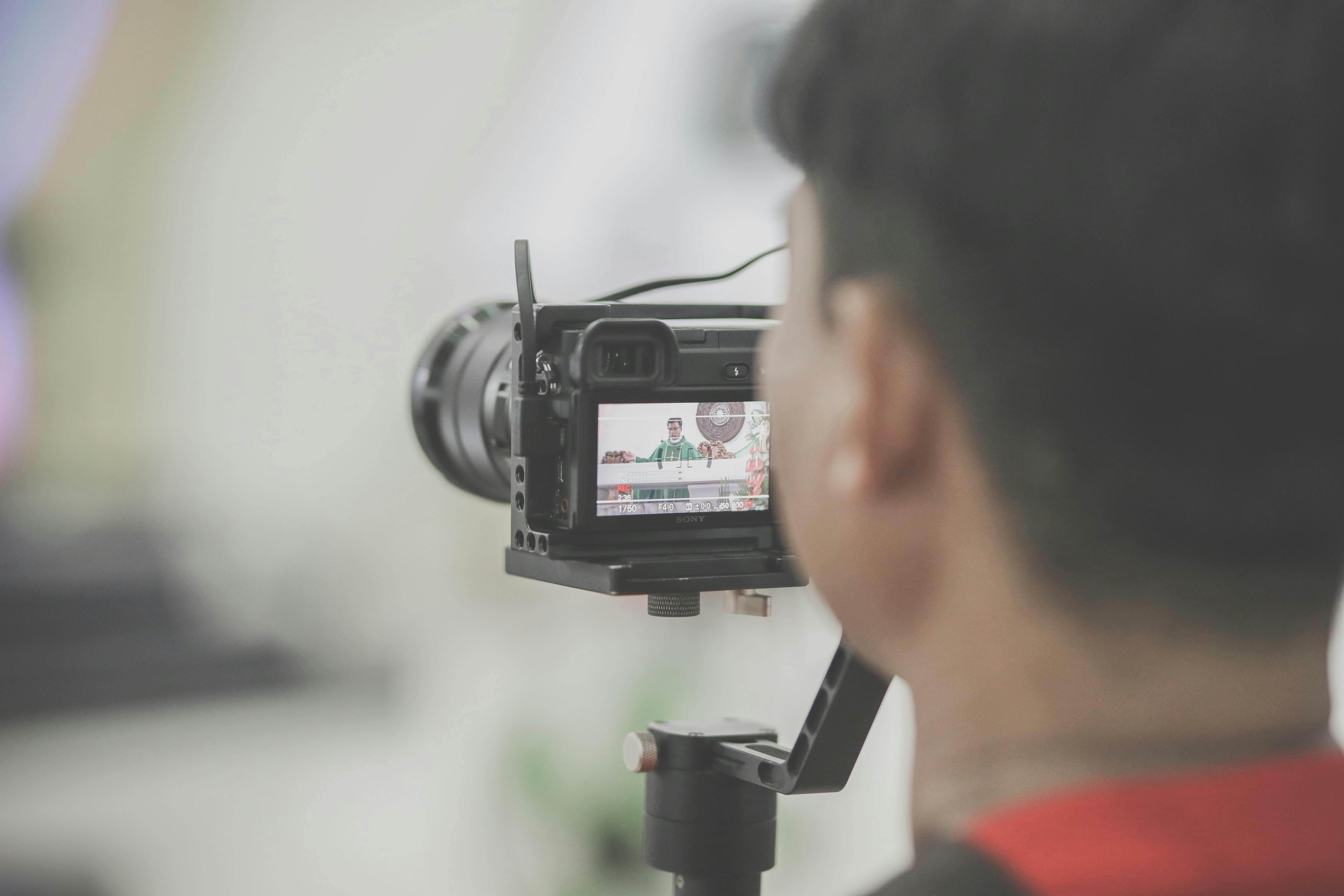
Unlock unparalleled video advertising success in 2026. This comprehensive guide reveals the top platforms, AI-driven strategies, and monetization tactics to boost your CPM and RPM, ensuring maximum return on investment. Compare leading solutions for advertisers and publishers with purchasing intent, from programmatic DSPs to CTV-first platforms and AI creative tools.
Introduction to the Topic
Welcome to 2026, where the video advertising landscape isn't just evolving; it's undergoing a seismic transformation. For marketers and publishers alike, the opportunity to generate substantial revenue through video has never been greater, nor more complex. Traditional approaches are fading, replaced by a sophisticated ecosystem driven by artificial intelligence, hyper-personalization, and an explosion of Connected TV (CTV) consumption. If you're looking to not just participate but dominate in this dynamic arena, understanding the cutting-edge strategies and platforms is paramount. This article serves as your definitive blueprint to navigate the 2026 video advertising frontier, focusing relentlessly on maximizing your CPM (Cost Per Mille) and RPM (Revenue Per Mille) to deliver unparalleled ROI.
The imperative to optimize every ad dollar and every ad impression is more critical than ever. With increasing competition and audience fragmentation, generic video campaigns simply won't cut it. Our focus is squarely on actionable insights and comparing the best-in-class solutions that empower you to make informed decisions, drive conversions, and secure your financial future in the digital ad space. Get ready to transform your video advertising strategy from a cost center into a powerful profit engine.
Backgrounds & Facts
The journey to 2026 has seen video advertising transcend its origins as mere pre-roll and mid-roll insertions. Today, it encompasses a vast spectrum of formats and distribution channels, from short-form social video to interactive shoppable ads on CTV. Key trends have reshaped the industry:
- CTV Dominance: By 2026, CTV has solidified its position as a primary viewing platform, attracting premium ad spend due to its lean-back experience, engaged audiences, and measurable outcomes. Ad-supported video on demand (AVOD) and free ad-supported streaming TV (FAST) services are experiencing explosive growth.
- AI as the Core Engine: Artificial intelligence is no longer a buzzword; it's the operational backbone. AI powers everything from audience segmentation and predictive analytics to creative generation and real-time bid optimization, significantly enhancing ad relevance and performance.
- First-Party Data Imperative: In a post-cookie world, first-party data is the gold standard for targeting and personalization. Brands and publishers are heavily investing in data clean rooms and privacy-enhancing technologies to maintain effective audience reach without compromising user trust.
- Programmatic Everywhere: The vast majority of video ad transactions are now programmatic, enabling unprecedented efficiency, targeting precision, and scale across multiple devices and platforms.
- Interactive & Shoppable Formats: Video ads are becoming less intrusive and more engaging. Interactive elements, polls, and direct 'shop now' functionalities embedded within video content are driving higher conversion rates and direct purchasing intent.
Despite these advancements, challenges persist. Ad fraud remains a constant threat, and ensuring brand safety and viewability across diverse inventories requires sophisticated verification tools. Privacy regulations continue to evolve, demanding agile and compliant ad tech solutions. Understanding these foundational shifts is crucial for any entity aiming to maximize their video advertising CPM and RPM in 2026.
Expert Opinion / Analysis
“The era of mass-market video advertising is over. In 2026, success hinges on precision, personalization, and performance,” states Dr. Anya Sharma, Lead Data Scientist at AdVentures Global. “Advertisers must move beyond simple reach and focus on the quality of engagement and the measurable outcome of every impression. This means a full-funnel approach where video is not just for brand awareness but also for direct response and conversion.”
Our analysis points to three critical pillars for optimizing video ad revenue:
- Hyper-Contextual & Personalized Creative: Generic ads are ignored. Leveraging AI to dynamically generate and adapt video creatives based on user context, demographics, real-time behavior, and even emotional sentiment is non-negotiable. This boosts engagement, recall, and ultimately, conversion rates, directly impacting CPM and ROI.
- Sophisticated Cross-Platform Attribution: With audiences moving seamlessly between mobile, desktop, and CTV, understanding the true impact of each video touchpoint requires advanced, privacy-compliant attribution models. Multi-touch attribution, powered by machine learning, helps allocate budget effectively and identify the most valuable channels for your video spend.
- Leveraging First-Party Data for Predictive Targeting: The deprecation of third-party cookies has pushed first-party data to the forefront. Combining your proprietary customer data with advanced AI allows for highly predictive targeting models, identifying users most likely to convert, thereby reducing wasted ad spend and significantly increasing RPM for publishers and ROI for advertisers. Data clean rooms facilitate secure, privacy-compliant collaboration between brands and publishers, unlocking new targeting capabilities.
The expert consensus is clear: invest in platforms that offer deep data integration, advanced AI capabilities for optimization, and robust measurement frameworks. The future belongs to those who can master the art and science of data-driven video storytelling.
💰 Best Options in Comparison (VERY IMPORTANT)
For advertisers seeking to maximize ROI and publishers striving for higher RPM, selecting the right platforms and tools is a strategic imperative. Here, we compare the leading solutions that are defining video advertising success in 2026, focusing on their capabilities to drive revenue and performance.
- Unified Programmatic DSPs (e.g., The Trade Desk, Google DV360): These demand-side platforms offer unparalleled reach across CTV, desktop, and mobile video inventory. They provide sophisticated targeting, real-time bidding, and robust attribution models, making them essential for advertisers managing complex campaigns and seeking scale. Their strength lies in data integration and AI-driven optimization, allowing precise audience segmentation and budget allocation for maximum efficiency and ROI.
- CTV-First Ad Platforms (e.g., Roku Advertising, Amazon Ads): Specializing in the burgeoning Connected TV market, these platforms provide direct access to highly engaged, premium audiences. They offer unique first-party data insights from their own ecosystems, enabling precise targeting within a brand-safe environment. For advertisers prioritizing reach and impact on the big screen, these platforms deliver superior viewability and completion rates, translating to higher effective CPMs.
- AI-Powered Creative & Personalization Tools (e.g., VidMob, Creative Automation Platforms): While not direct ad-buying platforms, these tools are indispensable for maximizing the performance of your video ads. They leverage generative AI and machine learning to analyze creative effectiveness, automate A/B testing, and even dynamically generate personalized video variations at scale. By ensuring your creative resonates with specific audience segments, these tools directly uplift engagement, click-through rates, and conversion rates across all your ad platforms, thereby boosting overall ROI.
- Publisher Video Monetization Platforms (e.g., Google Ad Manager, Magnite): For publishers looking to maximize their video inventory's RPM, these supply-side platforms (SSPs) and ad servers are critical. They offer advanced yield management, header bidding solutions for video, and direct access to premium demand sources. Features like dynamic ad insertion (DAI) for live streams and sophisticated forecasting ensure publishers can sell their inventory at the highest possible prices, optimizing revenue generation across all video formats.
To help you choose the best fit for your specific needs, here’s a detailed comparison:
| Solution Category / Platform Example | Primary User | Core Benefit for Monetization | Key Features (2026 Focus) | Best For | Pricing Model / Revenue Share | AI & Data Capabilities |
|---|---|---|---|---|---|---|
| Unified Programmatic DSPs (e.g., The Trade Desk, Google DV360) | Advertisers, Agencies | Maximized ROI via precise targeting & optimization across all video channels. | Cross-channel buying, advanced first-party data integration (data clean rooms), predictive bidding, fraud detection. | Large-scale advertisers, full-funnel campaigns, complex audience targeting across devices. | CPM, CPCV (Cost Per Completed View), SAAS fees. | Advanced ML for bid optimization, audience insights, automated campaign management. |
| CTV-First Ad Platforms (e.g., Roku Advertising, Amazon Ads) | Advertisers, Brands | High-impact reach to engaged, premium CTV audiences; superior viewability. | Proprietary first-party CTV data, guaranteed viewability, interactive ad formats, shoppable video integrations. | Brands targeting affluent households, direct-to-consumer businesses, high-impact branding. | CPM, CPCV. | Household-level targeting, content consumption analytics, audience extension capabilities. |
| AI-Powered Creative & Personalization Tools (e.g., VidMob, Creative Automation Platforms) | Advertisers, Creative Teams, Agencies | Direct uplift in ad performance (CTR, conversions) via optimized, personalized creatives, boosting overall ROI. | Generative AI for video creation, real-time creative optimization, performance analytics, automated A/B testing. | Any advertiser seeking to maximize ad effectiveness, rapidly iterate creatives, and personalize at scale. | SAAS subscription, usage-based tiers. | Predictive creative insights, automated video editing, sentiment analysis, dynamic creative optimization (DCO). |
| Publisher Video Monetization Platforms (e.g., Google Ad Manager, Magnite) | Publishers, Broadcasters, Content Creators | Maximized RPM for video inventory through efficient yield management and access to premium demand. | Header bidding for video, dynamic ad insertion (DAI), advanced forecasting, direct deals, private marketplaces (PMPs). | Publishers with significant video inventory (OTT, websites), content creators, broadcasters. | Revenue share with publishers, SAAS fees for advanced features. | Yield optimization algorithms, audience data segmentation for buyers, real-time pricing. |
Outlook & Trends
Looking beyond 2026, the trajectory of video advertising points towards even deeper integration of AI, immersive experiences, and a renewed focus on privacy-centric value exchange. Here are the key trends to watch:
- Generative AI for End-to-End Campaign Management: Expect AI to move beyond creative generation to orchestrate entire video campaigns, from audience identification and media buying to real-time performance adjustments and automated reporting. This will significantly reduce operational costs and boost efficiency, directly impacting net ROI.
- The Rise of Immersive Video Ads: While still nascent, advertising within metaverse environments, augmented reality (AR) experiences, and virtual reality (VR) content will begin to gain traction. Brands will experiment with highly interactive, 3D video ads that offer unprecedented levels of engagement and product immersion.
- Enhanced Shoppability and Conversational Commerce: Video ads will become more intelligent and conversational. Imagine asking an AI assistant within a video ad about a product feature and completing a purchase without leaving the content. This frictionless path to purchase will redefine conversion rates.
- Privacy-Enhancing Technologies (PETs) at Scale: With privacy regulations tightening globally, the development and widespread adoption of PETs will be crucial. Homomorphic encryption, federated learning, and zero-knowledge proofs will enable data collaboration and targeting without exposing individual user data, ensuring sustainable advertising practices.
- Sustainability in Ad Tech: The environmental impact of digital advertising is gaining attention. Future trends will include tools and platforms optimized for lower energy consumption, more efficient data transfer, and ethical supply chain practices, appealing to environmentally conscious brands and consumers.
Staying ahead means continuously evaluating and adopting these emerging technologies and strategies. The future of video advertising is not just about showing ads; it's about creating valuable, personalized, and efficient experiences that drive measurable business outcomes.
Conclusion
The 2026 video advertising landscape is a dynamic, high-stakes environment demanding strategic foresight and technological prowess. To truly maximize your CPM and RPM, and achieve exceptional ROI, it’s imperative to embrace the power of AI-driven platforms, leverage first-party data effectively, and prioritize compelling, personalized creative experiences. The comparison of leading solutions highlights that whether you are an advertiser seeking unparalleled reach and conversion, or a publisher aiming to optimize your inventory's value, the right tools are available to propel your success.
Don't let complexity deter you. The opportunity to transform your video advertising into a formidable revenue engine is within reach. By investing in the cutting-edge platforms and strategies outlined in this guide, you are not just keeping pace with the industry; you are positioning yourself at its forefront. Embrace these innovations, make informed decisions based on your purchasing intent, and unlock the full monetization potential of video advertising in 2026 and beyond. The time to act is now – secure your competitive advantage and watch your revenue soar.